Fundo Festival Amazonas de Ópera

Amazonas Opera Festival
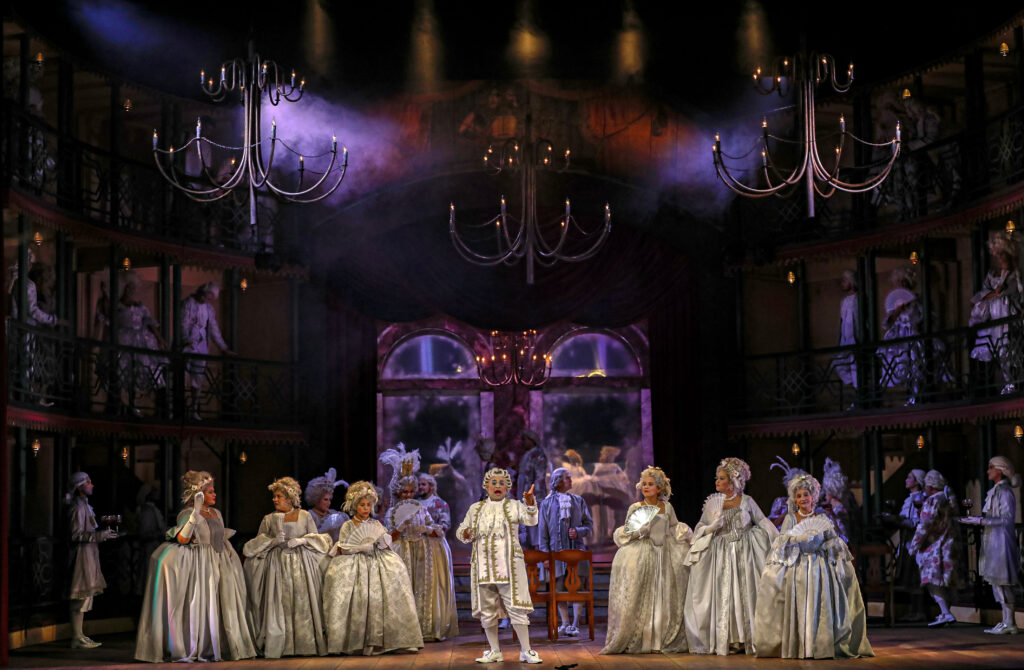
Created in Manaus in 1997, the Amazonas Opera Festival (FAO) is today one of the most prestigious events of its kind in the world. Having staged iconic shows by the likes of Alban Berg’s Lulu, and Richard Wagner’s complete ‘The Ring of the Nibelung’ cycle, the FAO has established itself as the world’s most important opera event outside the European and North American centers.
The Festival is the oldest and most regular event of its kind in Brazil, attracting the youngest opera audience in the country, demonstrating the interest of younger generations and highlighting the importance of Amazonas state in the Brazilian opera scene. As part of its commitment to access to culture, the FAO offers tickets for as little as BRL 10.00, thus supporting the broadening of access and creation of new audiences for opera.
Establishing itself also as a space for discussions regarding the opera market, the Festival has hosted important events such as the ‘Annual Latin American Opera Conference’ (OLA) and the ‘Opera Theaters and Creative Economy in Latin America’ gathering.
Furthermore, the FAO offers continuous projects in the areas of education, professional training and cultural qualification, including initiatives focused on children and adolescents, such as the Technical Production Center (CTP), Mentoring for Women, Mirim Opera, and the Claudio Santoro Academy of Arts and Crafts, amongst others. These actions boost social inclusion and local development.
In 2025, the FAO received the Order of Cultural Merit Medal, one of the highest distinctions awarded by the Federal Government for significant initiatives in the promotion of Brazilian culture. This honor recognizes the leading role that the Amazon region plays in the national operatic arts and the transformative role of the event in the transformation of opera as an accessible artistic expression, connected to the reality and potential of the region.
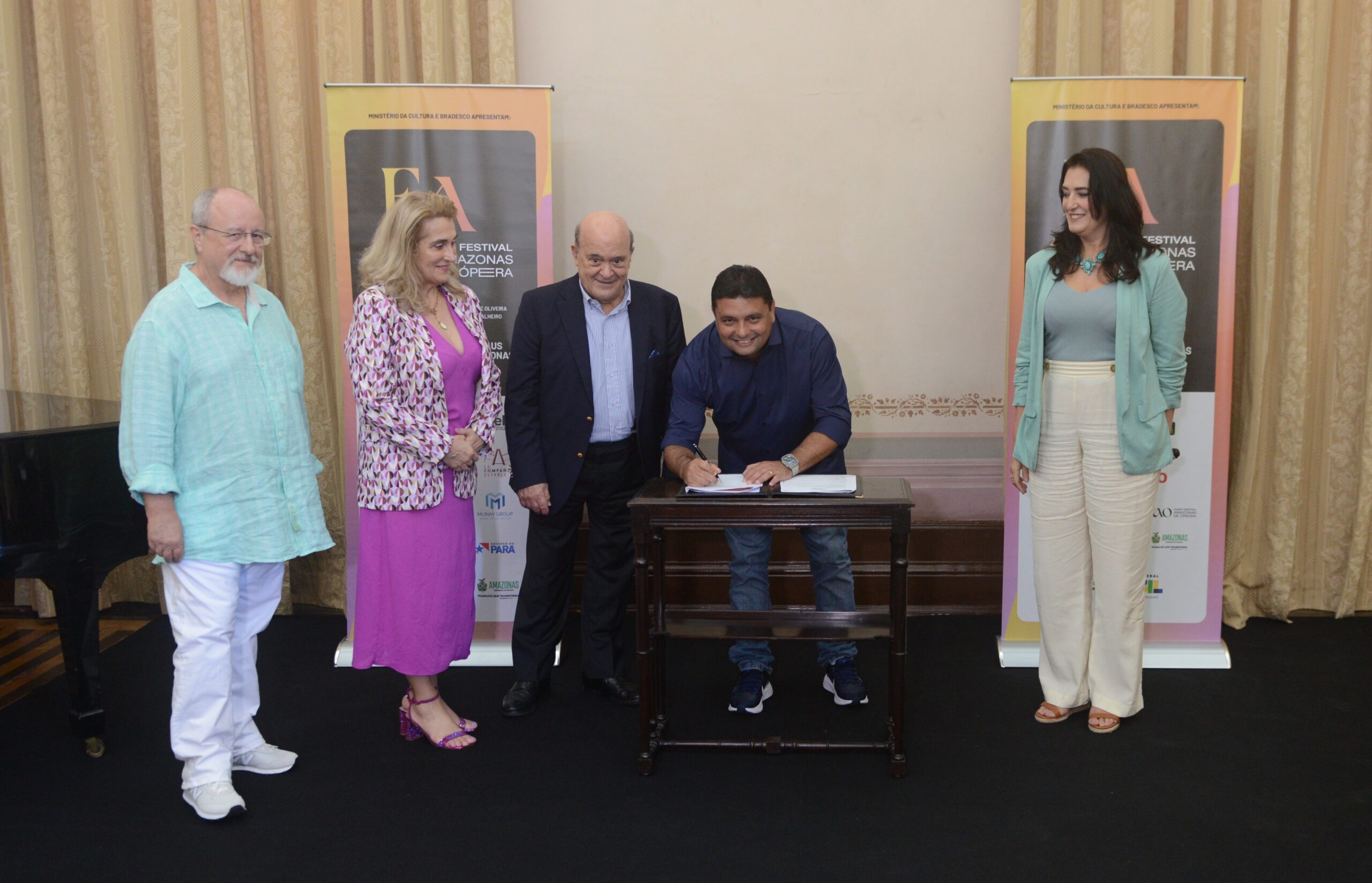
From left to right: Conductor Luiz Fernando Malheiro (Artistic Director of the FAO), Alexandra Maurício (Executive Director of Cascais Opera), Adriano Jordão (Artistic Director of Cascais Opera), Secretary Caio André (Secretary of Culture and Creative Economy of the State of Amazonas), and Flávia Furtado (President and CEO of FFAO and Executive Director of FAO) sign a Cooperation Agreement between FAO and Cascais Opera.
In 2025, the FAO and the Portugal-based Cascais Opera signed a Collaboration Protocol to include the Carlos Gomes Award in the Cascais Opera – International Singing Competition. As well as acting as a basis for international cultural exchange, the award shines an international spotlight on the FAO and operates as an ambassador for the Festival, whilst also honoring Carlos Gomes, Brazil’s greatest ever opera composer.
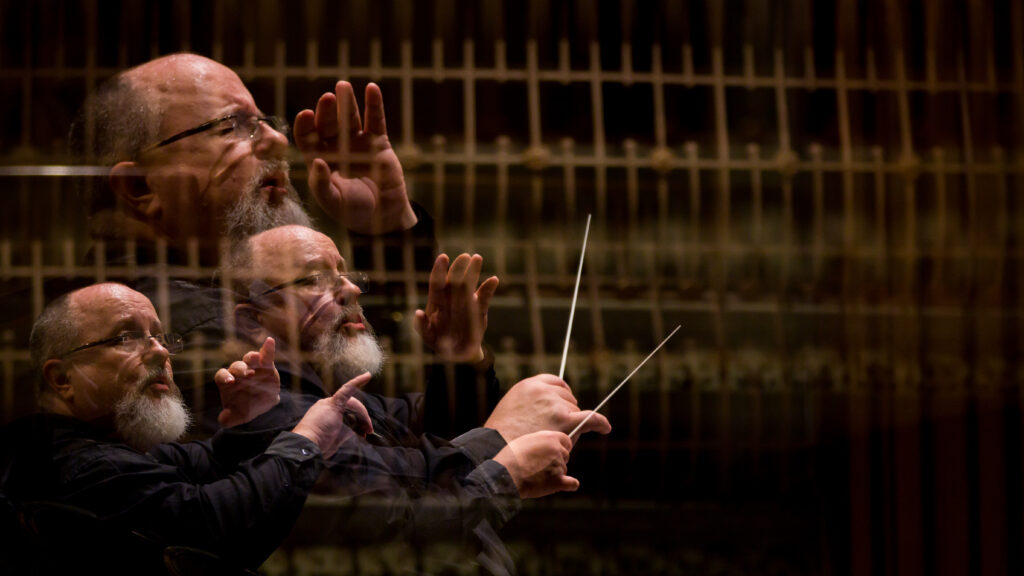
Conductor Luiz Fernando Malheiro
Artistic Director of the FAO
Critically acclaimed as one of the most important names in Brazilian opera, ‘Maestro Malheiro’, as he is known, has conducted more than 70 operatic works.
He studied composing with J. Targosz, in Poland, and with R. Dionis, in Italy. He studied conducting with T. Colacioppo, in Brazil, and K. Missona, in Poland; and in Italy, with Leonard Bernstein, in Rome, F. Leitner, in Siena, and Carlo Maria Giulini, in Milan.
He is currently the Artistic Director and Head Conductor of the Amazonas Philharmonic Orchestra, and Artistic Director of the Amazonas Opera Festival (FAO). He was Artistic Director of the São Pedro Theater, in São Paulo, and head conductor of its orchestra; he was also Musical and Opera Director at the Municipal Theater of Rio de Janeiro.
Winner of the Carlos Gomes Award: Opera Conductor (2012, 2011 and 2009) and Universo da Ópera 2000 Conductor, in 2005, as part of the FAO, he directed the first Brazilian performance of Wagner’s ‘The Ring of the Nibelung’, for which he received another two awards: Universo da Ópera and Show of the Year. He has recorded operas with the National Radio of Bulgaria and conducted orchestras and operas all over the world, in countries including Argentina, Bulgaria, Colombia, Spain, the United States, Greece, Israel, Italy, Mexico and Portugal.
Amazonas Theater
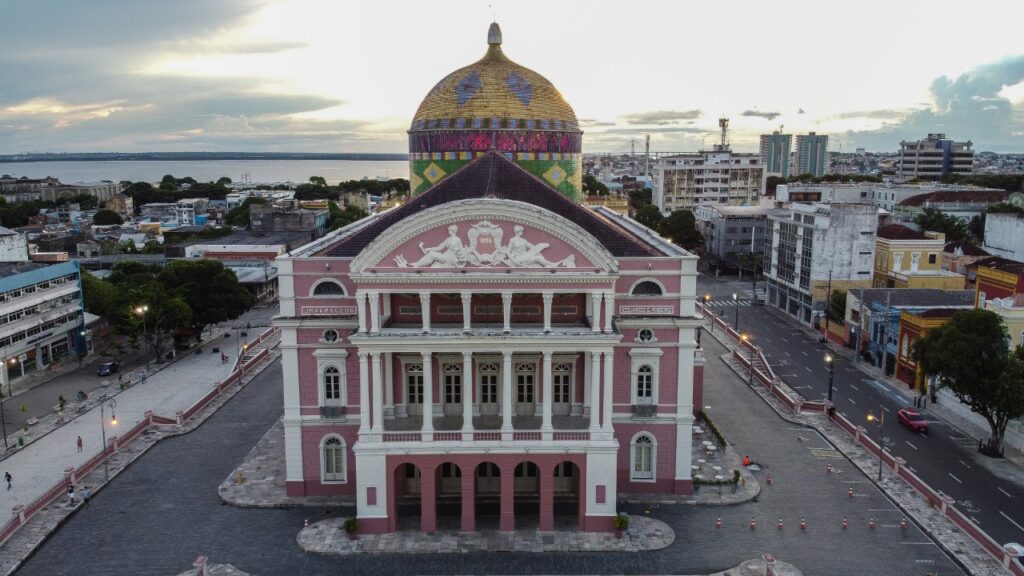
The FAO is staged in one of great cultural jewels of the Amazon region – the Amazonas Theater, in the Historical Center of Manaus. Inaugurated in 1896, it was named one of the world’s most beautiful and important theaters by the British newspaper The Guardian.
During its more than 20 years in existence, the FAO has led an extensive process of transformation and repurposing of both the Theater itself and the surrounding area:
• Revitalization of the Amazonas Theater region in the São Sebastião Town Square, where it is located, with eight new hotels, two of which are 5-star rated, and more than ten new cafés and restaurants, as well as stores offering certified crafts products created by the Indigenous peoples of the Upper Amazonas region
• Opening of six musical instrument stores in the city
• Increased demand for professionals and trained technical experts to work in different areas of culture and tourism
Transformed from a rundown region, the area is now a vibrant part of the city, having been reappropriated by the local public.
Generation of Work and Income
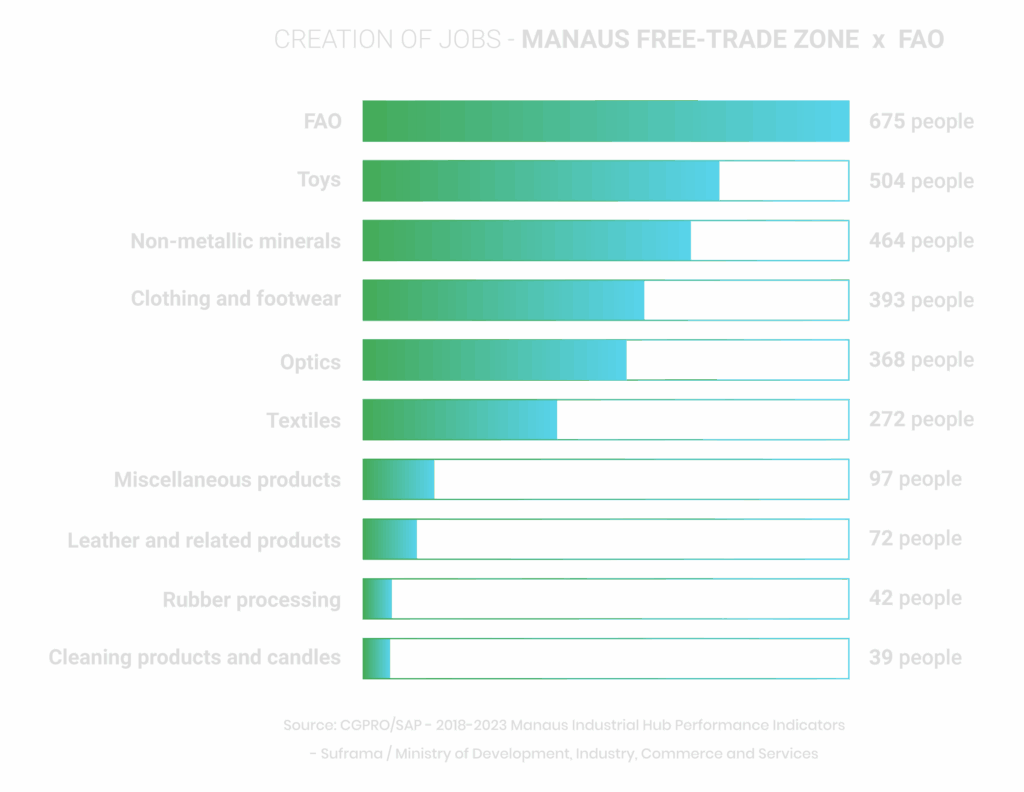
Since its founding, the Amazonas Opera Festival has established an authentic opera industry in Manaus. Around 1,500 people work on the festival, either directly or indirectly, each year.
Roughly 700 direct jobs are created each year. This is more than the total number of jobs generated in nine sectors in the Manaus Free-Trade Zone (toys, non-metallic minerals, clothing and footwear, optics, textiles, miscellaneous products, leather and related products, rubber processing, and cleaning products and candles). Roughly 400 employees of the Culture and Creative Economy Department of the State of Amazonas (SEC) and the Amazonas Theater work exclusively on the festival for a number of months of the year.
The Department also estimates that around 500 indirect jobs are created to meet the tourism demands during the event.
Continuous Training Programs
Technical Production Center (CTP)
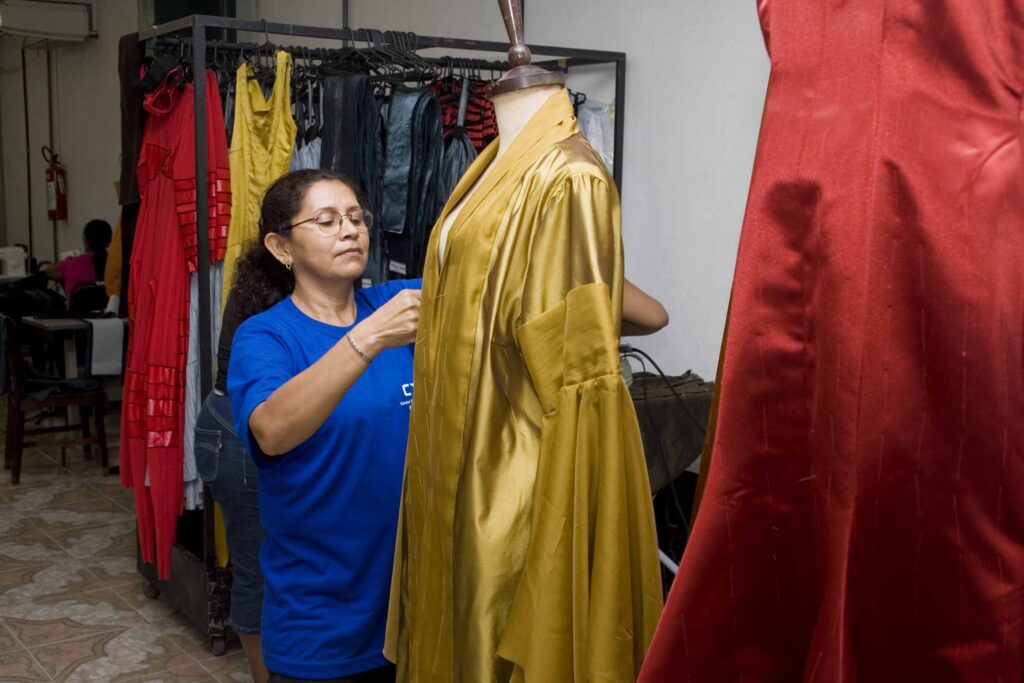
At the José Carlos Viana Marques (Zezinho) Technical Production Center (CTP), created and run by the FAO, 98% of the jobs are occupied by individuals native to the Amazon region.
At the CTP, these people receive training in metalwork, carpentry, painting, and sewing, as well as other skills, discovering new roles and finding themselves to be appreciated as part of the Festival structure.
The training and experience at the FAO have created a hub of professional qualification and artistic production, generating practically year-round employment opportunities for these professionals, since, in addition to the FAO, they can work on other large-scale events in the region, such as the Carnival and Parintins Festival.
Mentoring For Women
The FAO offers career mentoring, and cultural management and production programs for women, and has also created the Latin-American Opera Women’s Forum, a regional initiative focused on empowering women in the opera industry in Latin America.
Continuous Education Programs
Mirim Opera
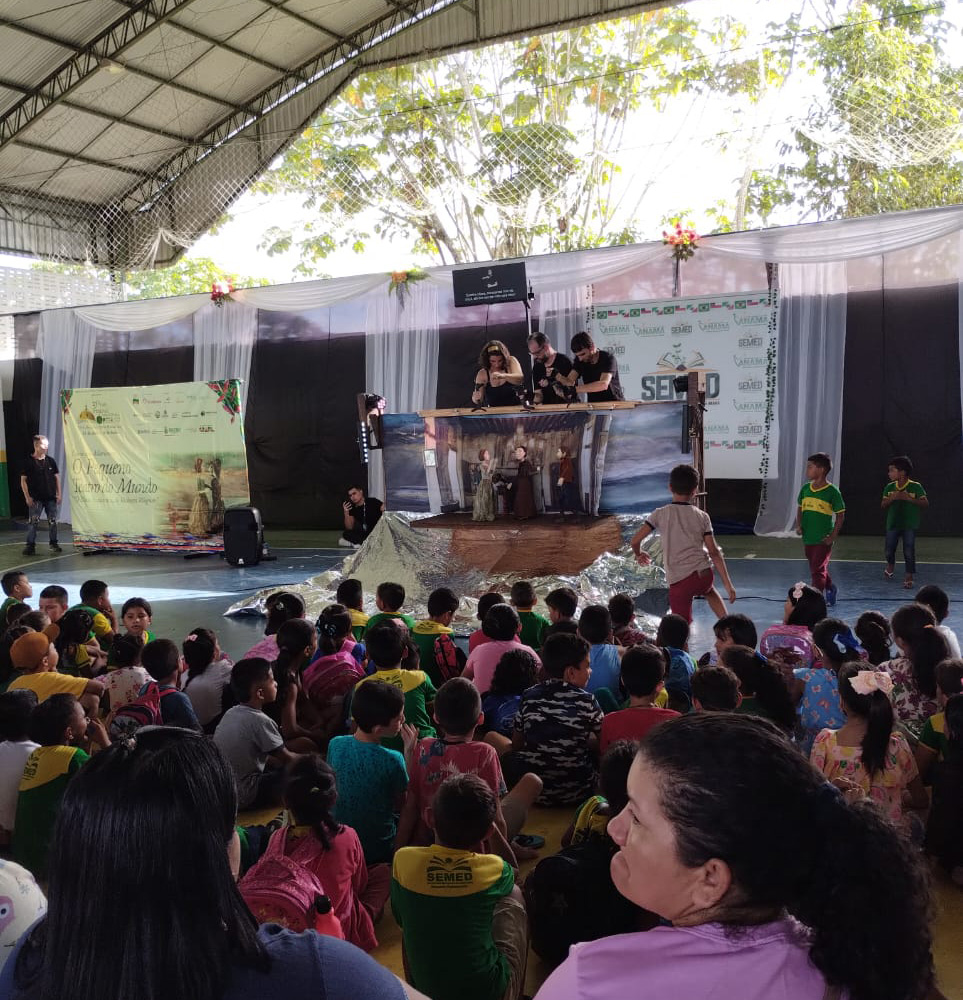
The Mirim Opera is a sociocultural project that offers the culture of opera to children and adolescents in the form of puppet shows.
The presentations are staged in public schools and hospitals throughout the State of Amazonas, as an initiative that simultaneously expands the opera-appreciating public and the repertoire of those participating.
Claudio Santoro Academy of Arts and Crafts
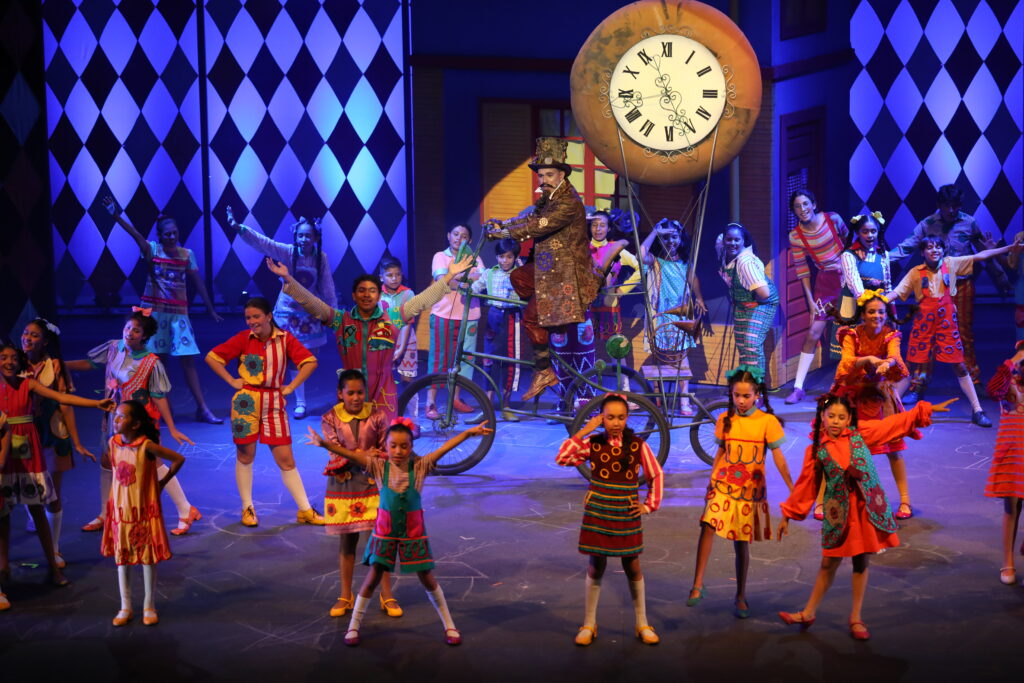
The Claudio Santoro Academy of Arts and Crafts offers singing, dance, music and theater classes conducted by professionals from the artistic ensembles of the Amazonas Theater for 6,000 children and adolescents each year in the municipality of Manaus.
Construction of a Sociocultural and Economic Legacy
Through the staging of the Festival and the undertaking of its long-term sociocultural and economic actions and projects, the FAO strengthens the Creative Economy in the State of Amazonas, where structural change employs culture as a tool for economic and social transformation.
By creating new opportunities and alternatives to predatory and/or illegal activities in the Amazon forest, the FAO is contributing to the sustainable development of the region, tackling of deforestation, preservation of the forest, and limiting of climate change.