Fundo Festival Amazonas de Ópera

Amazon Creative Corridor
The Amazon Creative Corridor was founded in 2022 as an initiative of the Culture and Creative Economy Departments of the States of Amazonas and Pará, which entered into a technical cooperation agreement focused on the training of qualified labor, generation of direct and indirect jobs, development of tourism, and promotion of the service chain.
In 2025, the agreement was made permanent and is now automatically renewed, with institutions from Colombia and Chile also being welcomed, thus promoting cultural, economic and social exchange. The Amazonas Festival Fund also joined the agreement, which is currently made up of the following members:
• Colombia: Fundación Compañia Estable and Orquestra Nueva Filarmonia
• Chile: Fundación Lírica Disidente
• Brazil: Amazonas Opera Festival Fund
• The Amazonas Theater and the Theatro da Paz, in Belém, are the founding members of the Corridor, represented by the Amazonas State Department for Culture and the Creative Economy, and the Pará State Department for Culture.

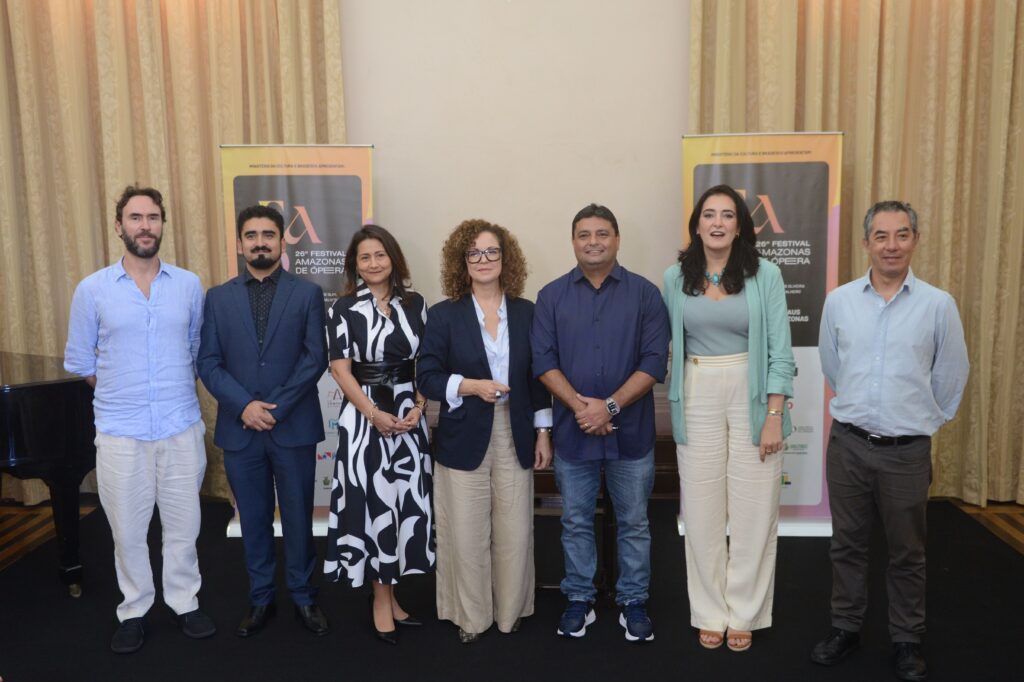
From left to right: Pedro Salazar (Director of Fundación Compañía Estable), Nicolas Vasquez (Director of Fundación Lírica Disidente), Cristina Guevara de Frint (Founder and CEO of the Munay Group), Secretary Úrsula Vidal (Secretary of Culture of the State of Pará), Secretary Caio André (Secretary of Culture and Creative Economy of the State of Amazonas), Flávia Furtado (President and CEO of FFAO and Executive Director of FAO), and Ricardo Jaramillo (Artistic and Music Director of the Nueva Filarmonía Orchestra).
This same year, the Amazonas Opera Festival Fund entered into a partnership with the Austrian company Munay Group, which works as a management consultant for the Amazon Creative Corridor. The company specializes in strategic management, sustainable finance, advice and consultation for the organizational development of social and environmental impact projects in Latin America, Europe and the United States, and includes creative economy activities in its operational profile, since the company understands the fundamental role they play in preserving the forest and mitigating the effects of the global climate crisis.
In addition to the exchange of productions and shows, the Amazon Creative Corridor promotes research and the circulation of impact data between its members, envisaging structuring initiatives for the towns in the Amazon region by means of a new circular, creative, sustainable, and green economy, capable of boosting urban development without harming the forest.
Aligned with the Belém Declaration, the Corridor shares the commitments declared by the Amazon countries to fully protect the region, tackle poverty and inequalities, and promote sustainable development. By offering alternatives to predatory and/or illegal activities, the Corridor contributes to preserving the forest, tackling deforestation, and limiting climate change.
The Amazon Creative Corridor is an organizational force for the transformation and sustainable development of the Amazon region, and is fully aligned with the commitments of the Amazon Summit and the Amazon Cooperation Treaty Organization.
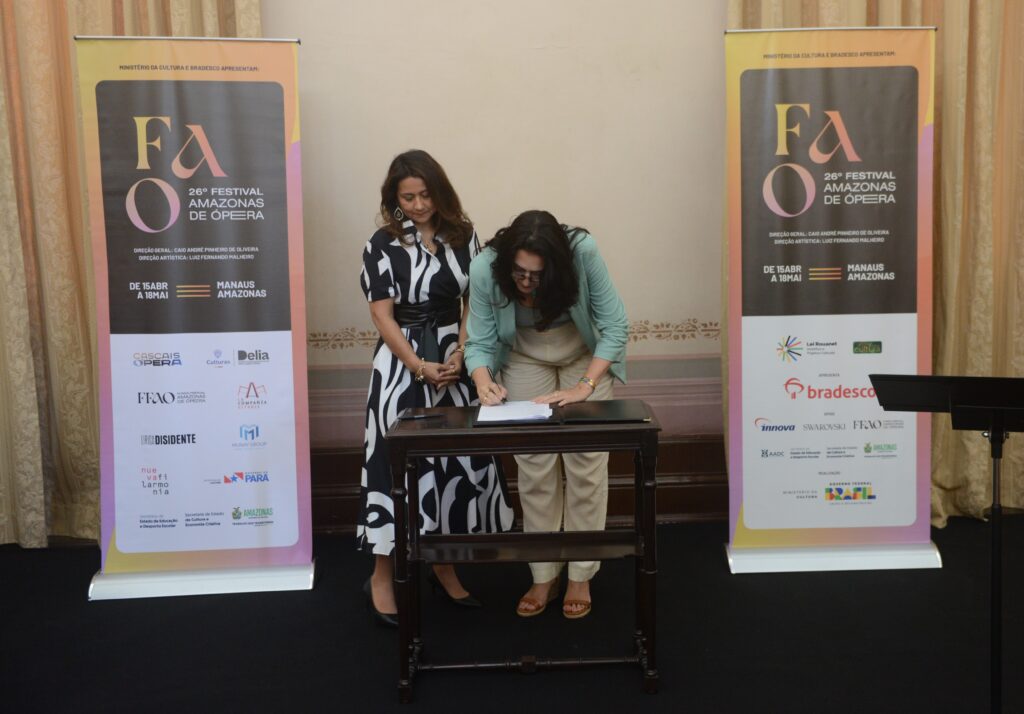
Cristina Guevara de Frint (Founder and CEO of the Munay Group) and Flávia Furtado (President and CEO of FFAO and Executive Director of FAO) sign a management consulting partnership for the Amazon Creative Corridor program.
Creative Economy
The Amazonas Opera Festival Fund believes that the Creative Economy is one of the keys to establishing a new socioeconomic structure in the Amazon region, replacing traditional industrial models with green and creative economies.
In Brazil, cultural and creative activities are responsible for 3.11% of the country’s GDP and 7.4 million formal jobs, according to data published by the Itaú Cultural Observatory in 2023, not including the direct and indirect temporary jobs also created. There are currently around 250,000 companies and institutions active in the sector.
The United Nations Conference on Sustainable Development, ‘Rio+20’, which took place in Brazil in 2012, established Culture and the Creative Economy as the fourth pillar of sustainable development, joining the social, economic, and environmental pillars.