Fundo Festival Amazonas de Ópera

About The FFAO
The Amazonas Opera Festival Fund
The Amazonas Opera Festival Fund (FFAO) is a not-for-profit, Non-Governmental Organization, that was created to extend the reach of the Amazonas Opera Festival and increase the understanding that environmental preservation is also pursued by means of the Creative Economy and, by doing so, attract investment to the area.
The FFAO comprises the Amazonas Opera Festival (FAO), the Amazon Creative Corridor, and continuous cultural, socio-educational, and socioeconomic actions.

VISION
We envision a future in which sustainable development flourishes in the Amazon, driven by initiatives that redefine the economic structure of the region, substituting traditional industrial models with green and creative economies. This transformation aims to facilitate a better and more sustainable society and the preservation of the Amazon forest, investing in the education of future generations and the creation of non-predatory work throughout the region.

Objective
Our aim is to construct a solid sociocultural and economic legacy for the Amazon region, employing the Creative Economy as an instrument for sustainable development, forest preservation, the tackling of deforestation, and limitation of climate change.
The FFAO has been constructing a solid funding network, with contributions from patrons of art and culture, along with global investors and philanthropists who are committed to the sustainable development of the Amazon region.
Manaus, AM – A view of homes and stilt houses along the
banks of the Educandos Igarapé – July 18, 2024 –Photo by
Michael Dantas.
Context
The Amazon is a diverse region which is home to Indigenous peoples, tropical forest, and large urban centers. Any approach which aims to preserve the environment needs not only to understand this diversity but embrace it.
It is essential to understand that the urban centers are not only agents of degradation, but also part of the solution, performing a fundamental role in the preservation of the environment. They are key parts in the combination of efforts, generation of knowledge, and promotion of sustainable economic alternatives that help to preserve the forest and tackle deforestation in the Amazon region.
• Belém, the capital of the state of Pará, has a population of 1.3 million. Of this total, 55.49% live in favelas.*
• Manaus, the capital of the state of Amazonas, has a population of 2.06 million, with 53.88% of the inhabitants living in favelas.*
These are the two biggest Brazilian cities in the Amazon region and the only two Brazilian state capitals with more than 50% of the inhabitants living in favelas and urban communities. More than half of their residents live in a state of poverty and in urgent need of educational and social mobility initiatives.
Cities such as Belém and Manaus are large centers of political decision-making and important hubs for the distribution of information, restriction of climate change, and tackling of deforestation. By means of the Creative Economy, they can become drivers of transformation, not only for their own metropolitan regions, but also for their surrounding areas and neighboring States, generating decent work and stimulating sustainable economies, thereby reducing pressure on the forest, and offering real alternatives to dependence on predatory, extractivist and/or illegal activities.
* Source: Instituto Brasileiro de Geografia e Estatística (Brazilian Institute of Geography and Statistics / IBGE). 2022 Demographic Census.
Areas of Activity
Culture + Sustainability
Quality Education with singing, dance, music and theater classes for 6,000 children and adolescents each year in the municipality of Manaus.
Sustainable Economy with the promotion of legal, non-predatory, and non-extractivist businesses and economic activities in the Amazon region.
Generation of work and income for the local communities in the urban areas, thereby reducing pressure on the forest.
Tackling of Deforestation involving the strengthening of the towns in the Amazon region, and economic and political hubs that play an important role in restricting climate change.
Creative Economy in the towns in the Amazon region, where structural change employs culture as a tool for economic and social transformation.
Cooperation Agreements between states and countries in the Amazon region, such as the Amazon Creative Corridor.
Results and Impact
The actions supported by the Amazonas Opera Festival Fund (FFAO) have a cultural, social, and economic impact, with ongoing initiatives in the areas of education, training, and the generation of work and income, as well as the staging of the Amazonas Opera Festival (FAO) and development of the Amazon Creative Corridor. Some of the results include:
• The FAO creates more jobs than nine sectors located in the Manaus Free-Trade Zone (toys, non-metallic minerals, clothing and footwear, optics, textiles, miscellaneous products, leather and related products, rubber processing, and cleaning products and candles).
• In total, around 1,500 people work on the FAO, either directly or indirectly, each year. Roughly 400 employees of the Culture and Creative Economy Departments of the State of Amazonas (SEC) and the Amazonas Theater work exclusively on the festival for a number of months of the year. The Department also estimates that around 500 indirect jobs are created to meet the tourism demands during the event.
• The Claudio Santoro Academy of Arts and Crafts offers singing, dance, music, and theater classes for 6,000 children and adolescents each year in the municipality of Manaus.
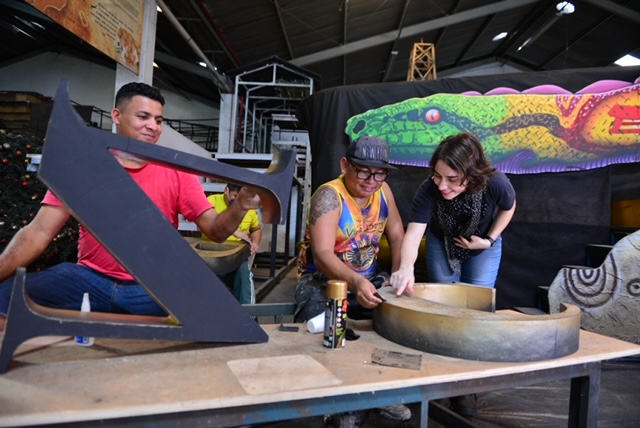
• At the FAO’s José Carlos Viana Marques (Zezinho) Technical Production Center (CTP), 98% of the jobs – including metalworkers, props builders, seamstresses, and wig makers, amongst others – are occupied by individuals native to the Amazon region.
• Revitalization of the area neighboring the Amazonas Theater, with eight new hotels, two of which are 5-star rated, and more than ten new cafés and restaurants in the São Sebastião Town Square, where the theater is located.
• Opening of six musical instrument stores in the city.
• Signing of a Cooperation Agreement between the Culture and Creative Economy Departments of the States of Amazonas and Pará for creation of the Amazon Creative Corridor.
• Signing of an International Cooperation Agreement between Amazon region countries for expansion of the Amazon Creative Corridor.
Sustainable Development Goals (SDGs)
The Amazonas Opera Festival (FAO) and the Amazon Creative Corridor both contribute to achieving the following Sustainable Development Goals (SDGs):
4 – Quality education
• Tickets at discounted prices throughout the festival period.
• Singing, dance, music and theater classes offered each year by the Claudio Santoro Academy of Arts and Crafts to 6,000 children and adolescents in the municipality of Manaus.
• Generation of direct and indirect jobs and income for the local communities in urban areas, contributing to the promotion of business and legal, non-predatory and non-extractivist activities in the Amazon region.
5 – Gender Equality
• The FAO offers career mentoring, and cultural management and production programs for women, and has also created the Latin-American Opera Women’s Forum, a regional initiative focused on empowering women in the opera industry in Latin America.
8 – Decent work and economic growth, and 10 – Reduced inequalities
• Creative Economy.
• Generation of income for 1,500 people, including direct and indirect jobs.
11 – Sustainable cities and communities
• FAO is held in one of the great cultural gems of the Amazon, the Amazonas Theater, in the Historic Center of Manaus. Opened in 1869, the Theater is considered one of the most beautiful and important theaters in the world.
• The FAO promoted a major revitalization of the Theater and its surroundings, leading to the population reappropriating the heritage and the region where it is located.
13 – Climate Action
• Strengthening of the towns in the Amazon region as an instrument for tackling deforestation.
• Promotion of legal, non-predatory, and non-extractivist businesses and economic activities in the Amazon region.
17 – Partnerships for the Goals
• Regional integration of the Brazilian states in the Amazon region, creating a hub of professional qualification and artistic production.
• An International Cooperation Agreement between Amazon region countries for expansion of the Amazon Creative Corridor.
Compliance and Transparency
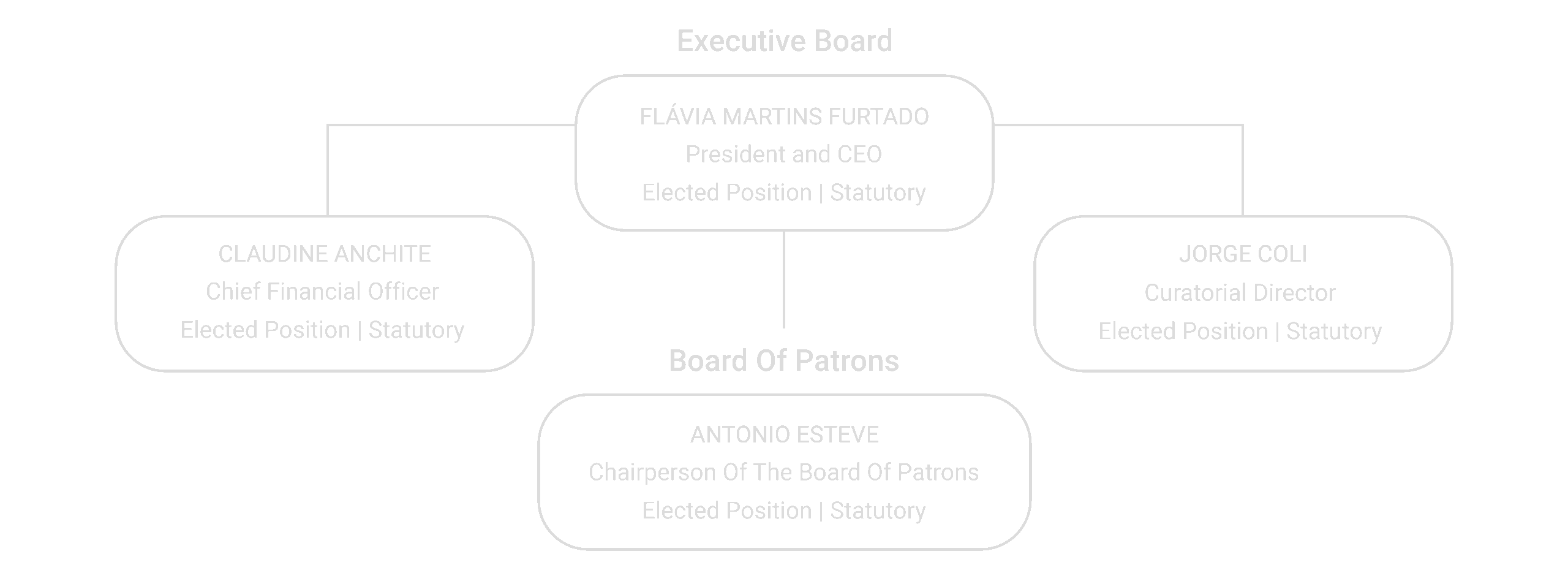
Governance of the FFAO
.Diretoria, Flávia Martins Furtado, Diretora Presidente, cargo eletivo, Estatutário. Claudine Anchite, Diretora Financeira, cargo eletivo, Estatutário. Jorge Coli Diretor Curatorial, cargo eletivo, Estatutário. Conselho de Patronos, Antonio Esteve, Presidente do Conselho de Patronos, cargo eletivo, Estatutário.

Flávia Furtado
President and CEO of the FFAO
Flávia Furtado, pianist and cultural producer, is the driving force behind the Amazonas Opera Festival Fund.
With a sound musical training acquired in Brazil under the tutelage of Linda Bustani, and further study in Belgium under Heidi Hendricks, she also holds a degree in Overseas Trade, which allows her to skillfully navigate her way through the world of the economics of culture. Amongst other things, she is dedicated to expanding the horizons of Latin-American opera, and her expertise is widely recognized, having been one of the 10 finalists in the prestigious ‘The Classical: NEXT Innovation Award’ in 2020, and, more recently, winner of the ‘2023 Grand Concert Award’, demonstrating the public’s recognition of her untiring work on behalf of opera in Brazil.
She is an active member of the Brazilian Forum for Opera, Dance & Concert Music. She has produced more than 70 classical music events, ranging from operas and concerts to festivals.
Transparent Management of Funds
The Internal Regulations of the Amazonas Opera Festival Fund objectively highlights the needs and assurances of the potential partners, including both individuals and legal entities, wishing to invest financial resources in the Festival.